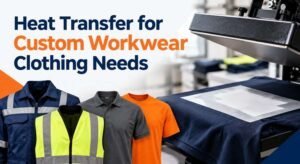
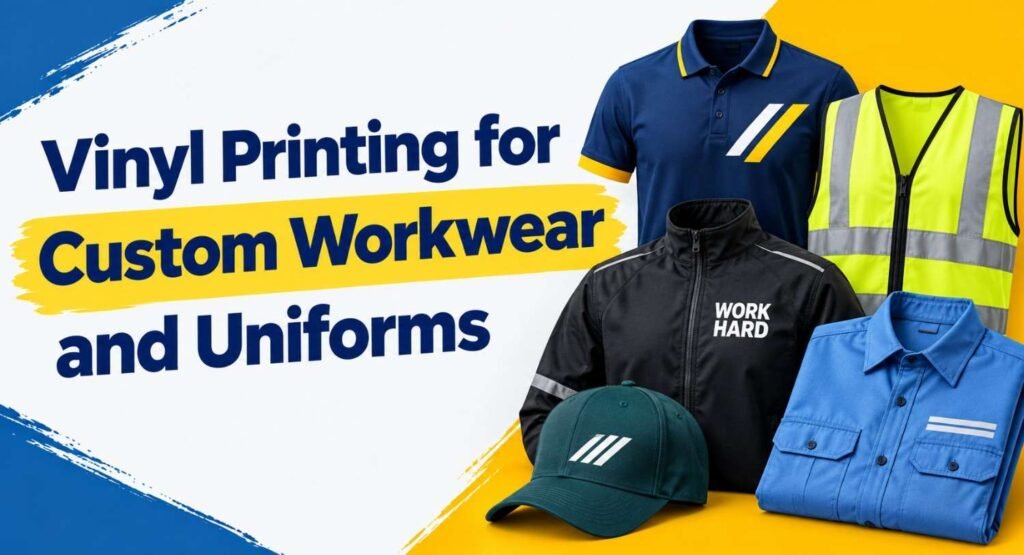
Custom workwear helps businesses create a professional appearance while making employees easier to identify on-site. Adding a company logo, employee name, job title or other branding can turn a standard garment into a recognisable uniform.
For many businesses, vinyl printing for Custom workwear offers a practical way to personalise T-shirts, polo shirts, hoodies, sweatshirts, jackets and other garments. Vinyl can produce clean lettering, bold graphics and strong branding without requiring a large production run.
But is vinyl printing suitable for every type of workwear? What designs work best, and how durable is the finished print? This guide explains what businesses should know before choosing vinyl for their uniforms.
What Is Vinyl Printing for Custom Workwear?
Vinyl printing is a garment decoration method that uses a specialised vinyl material. The design is cut into the required shape, unwanted vinyl is removed, and the finished design is applied to the garment using heat and pressure.
This process is commonly used for:
- Company logos
- Employee names
- Job titles
- Numbers and lettering
- Simple promotional graphics
- Team uniforms
- Trade and construction workwear
- Staff T-shirts and polo shirts
- Event and promotional clothing
One reason vinyl printing for Custom workwear is popular is its ability to create sharp, solid designs. It works particularly well when a business needs clear text or a relatively simple logo rather than a highly detailed photographic image.
The finished appearance can vary depending on the vinyl material, garment fabric, design and application method, so choosing the right combination is important.
Why Choose Vinyl Printing for Business Uniforms?
Businesses often need uniforms that look consistent without making the ordering process unnecessarily complicated. Vinyl printing can be suitable when the required design is relatively straightforward and the business wants individual personalisation.
Some key advantages include:
Can Vinyl Printing Create Professional-Looking Uniforms?
Yes. A well-designed vinyl application can give workwear a clean and professional appearance. Company names, logos and employee details can be arranged clearly on the chest, back, sleeve or other suitable areas.
For example, a cleaning company might use a small logo on the front and a larger company name on the back. A tradesperson may have a business logo combined with a telephone number or website address.
The quality of the final result depends on both the artwork and application process, so the design should be prepared specifically for garment printing.
Is Vinyl Suitable for Small Uniform Orders?
Vinyl can be particularly useful when only a small number of garments are required. Businesses do not necessarily need to order a large quantity simply to add names or numbers to their uniforms.
This makes it useful for:
- New employees
- Small businesses
- Temporary teams
- Events
- Individual replacement garments
- Sports and activity groups
For personalised workwear, vinyl printing for Custom workwear can therefore provide flexibility when each garment needs slightly different information.
Can Vinyl Be Used for Employee Names and Job Titles?
Yes. Text is one of the most suitable applications for vinyl printing. Names, roles and numbers can be cut into clean lettering and applied to workwear.
This can be especially useful where several employees wear the same uniform but need individual identification.
Which Workwear Garments Can Be Vinyl Printed?
Vinyl can be applied to many common garments, although the fabric composition and surface need to be considered before production.
Common options include:
- T-shirts
- Polo shirts
- Sweatshirts
- Hoodies
- Work jackets
- Hi-vis garments where appropriate
- Aprons
- Teamwear
- Other suitable textile garments
Cotton and polyester garments can often be decorated using appropriate vinyl products, but not every vinyl type is compatible with every fabric.
Some technical or performance fabrics may require a particular application method or specialist material. Garments with unusual coatings, textured surfaces or heat-sensitive materials should be assessed before printing.
How Does Vinyl Printing Work?
The process generally involves several stages.
1. How Is the Design Prepared?
The logo, wording or artwork is converted into a format suitable for cutting. Simple designs with defined shapes and clean lettering are generally easier to reproduce accurately.
Very small details, thin lines and complicated artwork may require adjustments before production.
2. How Is the Vinyl Cut?
A cutting machine follows the digital design and cuts the vinyl material into the required shapes.
For lettering or logos, the unwanted material surrounding the design is removed. This process is often called weeding.
3. How Is the Design Applied?
The prepared vinyl is positioned on the garment. Heat and pressure are then applied according to the requirements of the particular vinyl and fabric.
The temperature, pressure and application time matter because incorrect settings can affect adhesion, appearance or the garment itself.
4. How Is the Finished Workwear Checked?
After application, the design should be checked for positioning, adhesion, edges and overall appearance. A properly prepared and applied design should sit neatly on the garment without obvious lifting or uneven areas.
What Types of Designs Work Best With Vinyl?
Vinyl generally performs well with bold and relatively simple artwork.
Good applications include:
- Large company names
- Bold logos
- Simple symbols
- Employee names
- Numbers
- Short slogans
- Single-colour or multi-colour block designs
Very detailed artwork can be more challenging. Designs containing gradients, photographic effects or many tiny elements may be better suited to other garment decoration methods.
For businesses considering vinyl printing for Custom workwear, the artwork should be reviewed before production to determine whether vinyl can reproduce it effectively.
How Durable Is Vinyl Printing on Workwear?
The durability of a vinyl print depends on several factors rather than the printing method alone.
Important considerations include:
- Quality of the vinyl
- Type of garment fabric
- Application temperature and pressure
- Correct curing or setting process
- Frequency of washing
- Washing temperature
- Use of harsh detergents
- Drying method
- General wear and tear
Workwear can experience more frequent washing and heavier use than everyday clothing. For that reason, businesses should follow the care instructions provided for the decorated garment.
Turning garments inside out before washing, using an appropriate washing temperature and avoiding unnecessarily harsh treatment can help preserve the print.
When Is Vinyl Printing Not the Best Choice?
Vinyl is versatile, but it is not automatically the right option for every design.
Another printing method may be more appropriate when:
- The artwork contains photographic detail
- The design has complex gradients
- A very large area needs detailed coverage
- The fabric has unusual technical properties
- A softer print feel is a major priority
- Extremely fine artwork needs to be reproduced
The most suitable decoration method depends on the garment, design, quantity, intended use and desired finish.
For straightforward logos, names and lettering, vinyl printing for Custom workwear can be a practical option. For complex artwork, it is worth discussing alternative decoration techniques before placing an order.
When Should You Consider Alternatives to Vinyl Printing?
Vinyl printing may not be the ideal choice for every type of artwork or garment. Designs with photographic details, complex gradients, very fine elements or extensive coverage may require a different printing method to achieve the desired result. Fabric type, print feel, durability and the intended use of the clothing should also be considered before choosing a decoration technique. For simple logos, names and lettering, vinyl printing for custom workwear can provide a clean and practical finish, while more complex designs may benefit from alternative printing methods.
How Should You Choose the Right Vinyl for Workwear?
Different vinyl materials are designed for different applications. Some are intended for particular fabrics, finishes or performance requirements.
When selecting vinyl workwear printing, consider:
What Fabric Is the Uniform Made From?
Check whether the garment is cotton, polyester, a blend or another material. The vinyl needs to be compatible with the fabric and its surface characteristics.
Where Will the Design Be Placed?
Chest logos, back prints, sleeve details and names may require different sizes and positioning.
How Will the Uniform Be Used?
A uniform worn indoors in an office may experience different conditions from clothing used on a construction site, warehouse or outdoor job.
Does the Design Need Personalisation?
If every employee needs a different name, number or role, vinyl can be useful because individual details can be produced as part of the same overall uniform design.
How Much Does Vinyl Printing for Workwear Cost?
The cost of custom workwear depends on several factors, so there is no single price that applies to every order.
The main factors can include:
- Number of garments
- Type of garment
- Number of printed areas
- Size of the design
- Number of colours
- Personalisation requirements
- Vinyl type
- Artwork preparation
- Production time
- Special garment requirements
For example, adding a small one-colour logo to a polo shirt will generally involve different production requirements from applying a large, multi-colour design to both the front and back of a jacket.
Getting a quotation based on the exact garment and artwork is the most reliable way to establish the final cost.
How Can You Make Custom Workwear Last Longer?
Proper garment care can help maintain both the clothing and the printed design.
Follow the garment and print-care instructions, and consider these general practices:
- Wash garments at the recommended temperature.
- Turn printed garments inside out where appropriate.
- Avoid unnecessarily aggressive detergents.
- Do not scrub directly over the vinyl.
- Follow recommended drying instructions.
- Avoid applying excessive direct heat to the printed area.
- Store uniforms appropriately between uses.
Businesses with heavily used uniforms should also inspect garments regularly and replace items when the underlying clothing has become excessively worn.
Can Vinyl Printing Be Used for Different Employees?
Yes. One of the useful applications of vinyl printing for Custom workwear is individual personalisation.
A business could have the same core branding across all uniforms while changing:
- Employee names
- Job titles
- Identification numbers
- Team numbers
- Departments
- Locations
This creates a consistent company appearance while still allowing each employee to have identifiable workwear.
Where Can You Get Custom Workwear With Vinyl Printing?
Choosing a reliable garment printing provider is important because the final result depends on more than the artwork itself. The garment, vinyl material, application settings and positioning all affect the finished product.
T Shirt Print London offers custom garment printing for businesses and individuals looking to add branding and personalisation to clothing.
Before ordering, provide clear artwork and explain how the garments will be used. If you are unsure whether your design is suitable for vinyl, ask the printer to assess the artwork and fabric combination before production.
Frequently Asked Questions
Is Vinyl Printing Good for Company Workwear?
Yes. Vinyl can be suitable for company workwear when the design consists mainly of clear lettering, logos, numbers or simple graphics. The final suitability depends on the garment fabric, design and expected use.
Can Vinyl Printing Be Used on Polo Shirts?
Yes, suitable vinyl can be applied to many polo shirts. The fabric composition should be checked first so that the correct vinyl and application settings can be selected.
Can I Put a Company Logo on Workwear With Vinyl?
Yes. Company logos are a common application for vinyl garment decoration, particularly when the artwork contains bold shapes and straightforward lettering.
Is Vinyl Printing Suitable for Small Businesses?
It can be. Small businesses may benefit from the flexibility of ordering personalised garments without requiring a large uniform programme. Vinyl can also be useful when individual employee names or roles need to be added.
Can Vinyl Printing Be Used on Polyester Workwear?
It can be, but the vinyl must be compatible with the specific polyester garment. Some polyester fabrics require specialist materials or application settings, so compatibility should be checked before production.
How Do I Wash Vinyl-Printed Workwear?
Follow the care instructions provided with the garment and print. Generally, avoid excessive heat, harsh washing conditions and direct aggressive treatment of the printed area to help maintain the design.
What Is Better for Detailed Workwear Logos: Vinyl or Another Printing Method?
It depends on the artwork. Vinyl is well suited to bold logos, lettering and simple graphics, while highly detailed designs, gradients or photographic artwork may be better suited to another decoration technique.
How Long Can Vinyl Printing Last on Workwear?
There is no fixed lifespan because durability depends on the vinyl quality, garment, application process, washing routine and level of wear. Proper application and appropriate garment care can help extend the useful life of the printed design.