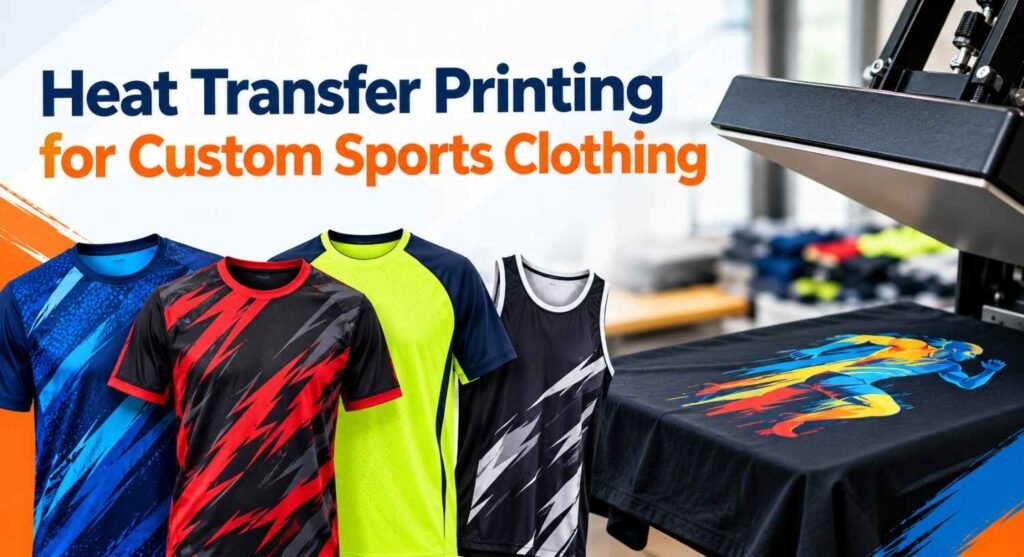
Heat transfer printing is a practical way to personalise sportswear with team names, player numbers, logos, sponsor details and other graphics. It works particularly well for clubs, schools, gyms, businesses and individual athletes who need personalised garments without committing to complex production methods.
For anyone ordering Custom Sports Clothing, choosing the right printing technique matters because sportswear needs to balance appearance, comfort, flexibility and durability. Heat transfer printing can provide sharp, clean designs while allowing individual garments to be personalised for different players or teams.
What Is Heat Transfer Printing for Sportswear?
Heat transfer printing is a decoration method that uses heat and pressure to apply a printed or cut design onto fabric. A design is prepared on a suitable transfer material and positioned on the garment. A heat press then applies controlled heat and pressure so the design bonds to the fabric.
The process can be used on various sports garments, including:
- Football shirts
- Rugby tops
- Basketball vests
- Training T-shirts
- Running tops
- Gym clothing
- Sports hoodies
- Team jackets
- Shorts and other suitable garments
Depending on the transfer material and garment fabric, the method can accommodate names, numbers, logos, lettering and detailed artwork.
Why Is Heat Transfer Printing Suitable for Custom Sports Clothing?
Sportswear is exposed to movement, stretching, sweat and regular washing. A suitable decoration method therefore needs to produce a professional-looking finish without unnecessarily affecting the garment’s comfort.
Heat transfer printing offers several useful advantages for sportswear.
Personalisation: Individual names and numbers can be added to team garments, making it easier to create personalised kits.
Sharp designs: Suitable transfer methods can reproduce clean lettering, numbers, logos and graphics.
Flexible ordering: Heat transfer can be useful when different garments require different names, numbers or designs.
Fast customisation: The process can be relatively straightforward once the artwork and garments are prepared.
Versatility: It can be used for various sports garments and designs, subject to fabric and transfer compatibility.
For teams that need different player details on otherwise matching garments, this flexibility can be particularly useful.
How Does Heat Transfer Printing Work on Sports Clothing?
Although the exact process depends on the transfer technology being used, the basic workflow generally involves several stages.
How Is the Design Prepared?
The artwork is first prepared in a format suitable for the selected transfer method. This may include a team logo, player name, number, sponsor artwork or another graphic.
The design should be checked for:
- Correct spelling
- Appropriate dimensions
- Suitable colours
- Image quality
- Placement
- Compatibility with the garment
Preparing the artwork correctly helps reduce mistakes before production begins.
How Is the Transfer Applied?
The prepared transfer is positioned on the selected area of the sports garment. The garment and transfer are then placed under a heat press.
The press applies a controlled combination of heat, pressure and time. These settings vary according to the transfer material and fabric, so following the appropriate application requirements is important.
Once the application is complete, the transfer is allowed to cool or is peeled according to the material’s requirements.
Which Sports Garments Can Be Heat Transfer Printed?
Heat transfer printing can be suitable for many common sports garments, but fabric composition should always be considered before production.
Common options include:
- Football and training shirts
- Basketball jerseys
- Running tops
- Gym T-shirts
- Sports hoodies
- Team jackets
- Training vests
- Athletic shorts
Synthetic sports fabrics such as polyester are widely used in modern sportswear. However, different materials can react differently to heat. Some technical garments may require specific transfer materials or lower-temperature application methods.
This is why checking the manufacturer’s garment specifications before printing is important.
What Designs Work Best for Custom Sports Clothing?
The best design depends on the purpose of the garment and the type of sportswear being produced.
Team Names and Player Numbers
Names and numbers are among the most common sportswear personalisation options. They make it easier to identify players and create a consistent team appearance.
A clear typeface and appropriate sizing are particularly important because numbers often need to remain readable from a distance.
Club and School Logos
A team, school or club logo can create a consistent visual identity across a group of garments. Logos should be supplied at an appropriate quality so important details remain clear after printing.
Sponsor Logos
Sports teams may also add sponsor branding to shirts and training clothing. Placement should be planned carefully so sponsor graphics do not interfere with player numbers, existing branding or the garment’s design.
Simple Promotional Designs
For gyms, sports events and fitness businesses, short messages or promotional graphics can also be applied to suitable garments.
Can Heat Transfer Printing Be Used for Individual Player Names and Numbers?
Yes, one of the useful applications of heat transfer printing is individual garment personalisation.
For example, a football team could have the same club logo on every shirt while each shirt receives a different player name and number.
This approach can be useful when:
- Each player needs unique personalisation
- A team has a small or changing squad
- Replacement shirts are required
- Different staff or participants need personalised clothing
- A club wants matching training and competition garments
It is important to provide a final list of names and numbers carefully before production because spelling or numbering errors can affect the finished garments.
How Should You Choose the Right Heat Transfer Method?
Not every transfer material is suitable for every sports garment. The right choice depends on several factors.
What Fabric Is the Garment Made From?
Start by checking the fabric composition. Cotton, polyester and blended fabrics may require different transfer solutions.
Sportswear containing performance fabrics may also have additional requirements related to heat sensitivity, stretch and garment construction.
How Much Stretch Does the Fabric Have?
Sports garments often need to stretch as the wearer moves. The transfer should therefore be appropriate for the level of stretch expected from the garment.
A design that is suitable for a casual T-shirt may not necessarily be the right choice for highly elastic performance clothing.
How Will the Garment Be Used?
Consider whether the clothing will be worn for occasional events, regular training, competitive matches or promotional activities.
Frequent-use sportswear needs appropriate printing and care to help maintain the appearance of the design.
What Does the Design Look Like?
Simple names, numbers and bold graphics may require a different solution from detailed, multi-colour artwork.
Discussing the artwork and garment type before production can help determine the most appropriate transfer approach.
What Should You Consider Before Ordering Custom Sports Clothing?
Good results depend on more than the printing process itself. Garment selection, artwork and placement all contribute to the finished product.
Before placing an order, consider:
- Garment fabric: Confirm that the garment is compatible with the selected transfer process.
- Artwork quality: Use suitable, high-quality artwork for logos and detailed designs.
- Sizing: Check that names, numbers and logos are appropriately sized for the garment.
- Placement: Decide where each element should appear before production.
- Colour: Make sure the design provides sufficient contrast against the garment.
- Quantity: Confirm the number of garments and the personalisation required for each one.
- Care instructions: Follow the recommended washing and drying instructions after printing.
These details can help prevent avoidable production problems.
How Can You Care for Heat Transfer Printed Sportswear?
Proper garment care can help preserve the appearance of printed sportswear.
Always follow the care instructions provided for the particular garment and transfer. In general, it is sensible to:
- Wash garments according to the recommended temperature.
- Turn printed clothing inside out before washing where appropriate.
- Avoid harsh cleaning products unless specifically recommended.
- Avoid excessive heat when drying.
- Do not iron directly over the printed design.
- Follow any specific instructions supplied with the garment.
Sports clothing can experience frequent washing, so following the correct care instructions is particularly important for team kits and training garments.
When Is Heat Transfer Printing a Good Choice for Sports Teams?
Heat transfer printing can be particularly useful when a team requires personalised garments with different names, numbers or logos.
It may suit:
- Local football clubs
- School sports teams
- University teams
- Amateur sports groups
- Fitness clubs
- Running groups
- Corporate sports teams
- Charity sporting events
- Individual athletes
It can also be useful when a team needs replacement garments with specific player information rather than producing an entirely new set.
For organisations looking for Custom Sports Clothing, discussing the garment fabric, artwork and intended use before production can help ensure the selected printing process is appropriate.
How Much Does Heat Transfer Printing Cost?
The cost of heat transfer printed sportswear depends on factors such as the garment, quantity, artwork, number of print positions and type of transfer required.
Additional personalisation can also affect the overall price. For example, a basic team logo may involve a different production requirement from a kit featuring individual names, numbers, sponsor logos and multiple print locations.
Rather than comparing prices based only on the printing method, consider the complete order requirements. Garment quality, personalisation, artwork preparation and production specifications can all affect the final cost.
What Makes a Professional Sportswear Print Look Better?
A professional result starts with a well-planned design. Even a suitable printing process can produce an unsatisfactory result if the artwork is poorly prepared or the placement is inconsistent.
For a cohesive team appearance:
- Use consistent logo placement.
- Keep player names and numbers aligned.
- Select readable typography.
- Maintain appropriate spacing.
- Check artwork dimensions before production.
- Make sure colours work well with the garment.
- Confirm every personalised detail before printing.
For teams, consistency is especially important because small differences between garments can make the final kit look less coordinated.
Where Can You Order Custom Sports Clothing With Heat Transfer Printing?
When choosing a sportswear printing service, look for a provider that can discuss your garment type, artwork requirements and intended use before production.
T-Shirt Print London offers custom garment printing services for customers looking to personalise clothing with their own designs.
Whether you need a small set of personalised sports tops or a larger team order, providing accurate artwork and clear personalisation details can make the production process more straightforward.
Frequently Asked Questions
Is Heat Transfer Printing Good for Sports Jerseys?
Heat transfer printing can be suitable for sports jerseys when the selected transfer material is compatible with the jersey fabric. The garment’s composition, stretch and care requirements should be checked before application.
Can You Put Player Names and Numbers on Sports Shirts?
Yes. Player names and numbers are common applications for heat transfer personalisation. Each garment can receive different details while maintaining the same team branding.
Does Heat Transfer Printing Stretch With Sportswear?
Some transfer materials are designed to accommodate fabric movement and stretch. The appropriate material should be selected based on the sportswear fabric and how much flexibility the garment requires.
Can Heat Transfer Printing Be Used on Polyester Sportswear?
It can be used on suitable polyester garments, but the transfer method and application settings need to be compatible with the fabric. Performance sportswear should be checked carefully before printing.
How Long Does Heat Transfer Printing Last on Sportswear?
The lifespan depends on the transfer material, garment fabric, application process and garment care. Following the recommended washing and drying instructions can help maintain the printed design.
Can Sports Team Logos Be Heat Transfer Printed?
Yes. Team, club, school and sponsor logos can be suitable for heat transfer printing when the artwork and transfer method are appropriate for the selected garment.
Is Heat Transfer Printing Suitable for Small Sportswear Orders?
It can be a practical option for smaller personalised orders, particularly when individual garments need different names, numbers or designs. The final suitability depends on the supplier’s production requirements.
What Information Should I Provide When Ordering Personalised Sportswear?
Provide the garment type, sizes, quantities, artwork, player names, numbers, print positions and any specific colour or design requirements. Checking these details before production helps reduce errors and ensures the finished garments match the intended design.