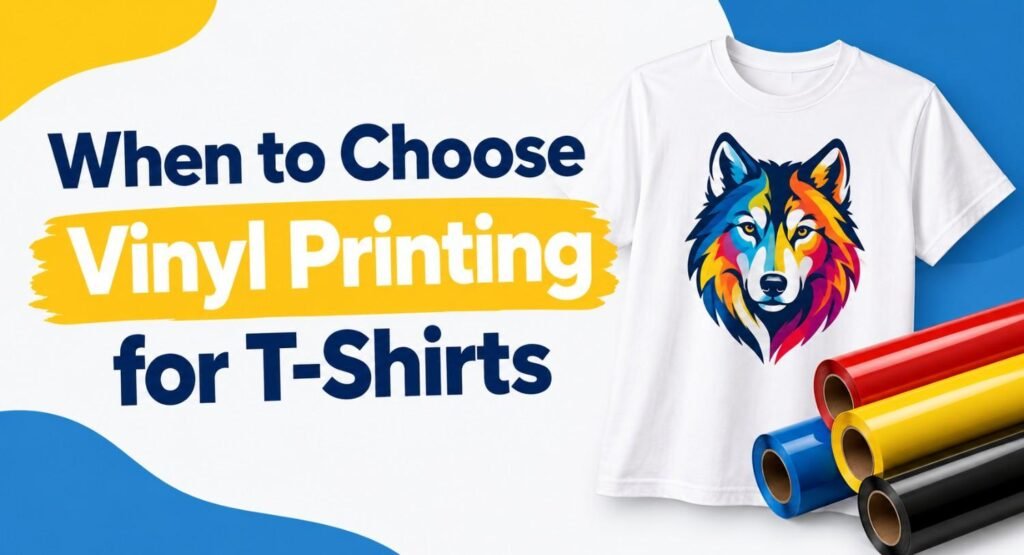
Choosing the right printing method can make a significant difference to the appearance, durability and cost of custom clothing. While several techniques are available, vinyl printing is particularly useful when you need bold designs, personalised garments or small quantities without compromising on visual impact.
But when should you actually choose this method? The answer depends on your design, the type of garment, the number of items you need and how you want the finished print to look.
This guide explains when vinyl printing for t-shirts is a practical choice, which designs work best with it, what to consider before ordering and when another printing method may be more suitable.
What Is Vinyl Printing for T-Shirts?
Vinyl printing involves cutting a design from a sheet of specialist heat-transfer vinyl and applying it to a garment using heat and pressure. The vinyl is cut into the required shapes, excess material is removed, and the remaining design is transferred onto the fabric.
The method is commonly used for:
- Names and numbers
- Logos
- Team shirts
- Workwear
- Sportswear
- Event clothing
- Personalised T-shirts
- Simple promotional designs
- Short-run custom clothing
Unlike some printing methods that place ink directly into or onto the fabric, vinyl creates a separate printed or coloured layer on the garment. This can produce a strong, defined finish, particularly for simple graphics and lettering.
Why Choose Vinyl Printing for T-Shirts?
Vinyl can be a suitable option when you want a clean, bold design with relatively straightforward production. It is particularly useful for personalised clothing where each garment may need a different name, number or small design adjustment.
One of its main advantages is flexibility for smaller orders. If you only need a few customised T-shirts, you may not need the setup associated with some traditional printing processes.
Other potential advantages include:
- Sharp edges around letters and shapes
- Strong, solid colours
- Suitable for individual names and numbers
- Useful for small orders
- Available in different vinyl finishes
- Suitable for many cotton and synthetic garments
- Effective for simple logos and graphics
- Quick personalisation for many standard designs
The result can look particularly effective when the artwork is bold rather than highly detailed.
When Is Vinyl Printing the Best Choice?
Vinyl printing for t-shirts is often worth considering when your design is relatively simple, your order is small or medium-sized, or personalisation is an important part of the project.
For example, imagine ordering 10 T-shirts for a sports team. Each shirt may require a different player name and number. Vinyl can be a practical solution because individual designs can be cut and applied to each garment.
It can also work well for businesses ordering branded workwear where employees need different names or roles added to their clothing.
Which Designs Work Well With Vinyl?
The design itself should be one of the first things you consider before choosing a printing method.
Vinyl is generally most effective for artwork with clear shapes, strong outlines and readable text. Logos with simple elements can work particularly well, as can large numbers and lettering.
For example, vinyl can be suitable for:
- Company names
- Simple brand logos
- Sports numbers
- Names on the back of shirts
- Short slogans
- Initials
- Event dates
- Simple symbols
Very intricate artwork may require more consideration. Extremely fine lines, tiny text and complex photographic images can be difficult to reproduce effectively with cut vinyl.
The more detailed the design becomes, the more important it is to discuss the artwork with your printer before production.
Can Vinyl Be Used for Workwear and Sportswear?
Yes. Vinyl can be used on many types of garments, including certain workwear and sportswear fabrics. However, the correct vinyl needs to be selected for the material.
Workwear often requires names, company logos or other identification details. Sportswear may need player numbers, names or team branding.
Fabric composition matters because cotton, polyester and specialist performance materials can respond differently to heat. Some garments may also have coatings or finishes that affect adhesion.
Before production, check that the chosen transfer material is compatible with the garment. A professional printer can advise on the appropriate application method and material for the fabric.
When You Need Personalised Names or Numbers
Names, numbers and short pieces of text are among the most common applications for heat-transfer vinyl.
Sports teams, schools, clubs and event organisers can use it to create individually personalised garments without requiring an entirely different printing process for every shirt.
This makes vinyl particularly useful when the artwork changes from one garment to another.
When You Only Need a Small Quantity
Small orders can make vinyl an attractive option because there may be less need for extensive setup.
If you need only a handful of T-shirts for a birthday event, club, stag or hen party, business launch or family occasion, a vinyl transfer can provide a practical way to produce customised clothing without ordering a large batch.
When Your Design Uses Bold Text or Simple Shapes
Simple artwork is generally well suited to vinyl cutting. Designs featuring large lettering, uncomplicated logos, numbers and solid shapes can produce a clean and defined appearance.
For example, a T-shirt containing a business name and telephone number may be better suited to a simple vinyl design than an artwork containing hundreds of tiny details.
When You Want a Specific Finish
Heat-transfer vinyl is available in different finishes, depending on the material and supplier. Options can include standard solid colours as well as specialist finishes.
Depending on the garment and design, you may be able to choose from effects such as:
- Matte
- Gloss
- Metallic
- Glitter
- Reflective
- Fluorescent
Specialist finishes can be useful when the purpose of the garment is to create a distinctive visual effect.
What Should You Consider Before Choosing Vinyl?
Before ordering, consider more than just the appearance of the design. The garment, artwork, quantity and intended use all affect whether vinyl is appropriate.
What Is the Garment Fabric?
Different fabrics require different application temperatures, pressure and transfer materials. Cotton is commonly used for custom T-shirts, while polyester and technical fabrics may require vinyl specifically designed for those materials.
How Detailed Is the Artwork?
Simple graphics are usually easier to reproduce using cut vinyl. If your artwork contains gradients, photographic imagery or many small details, another printing method may provide a more suitable result.
How Many T-Shirts Do You Need?
Think about both the quantity and whether every garment will have the same design.
For a small personalised order, vinyl may be convenient. For a very large order where hundreds of identical garments are required, other printing techniques may become more economical depending on the artwork and production requirements.
How Will the Garments Be Used?
A T-shirt worn occasionally for an event has different requirements from workwear that is washed frequently.
Consider how often the garment will be washed, how it will be used and what level of durability you require. Following the printer’s washing and care instructions is important for maintaining the appearance of a heat-applied design.
How Does Vinyl Compare With Other T-Shirt Printing Methods?
There is no single printing method that is ideal for every design. Vinyl should be considered alongside other options such as screen printing, direct-to-film (DTF) transfers and direct-to-garment (DTG) printing.
Screen printing can be suitable for larger quantities and bold designs, particularly when the same artwork is being reproduced across many garments.
DTF printing can handle colourful and detailed artwork and is useful for transferring complex designs onto a variety of garments.
DTG printing is designed for printing directly onto garments and can be useful for detailed, full-colour artwork, particularly on suitable fabrics.
Vinyl, meanwhile, can be particularly useful for bold, uncomplicated designs and personalised garments.
The right choice therefore depends on the combination of artwork, garment, quantity, budget and intended use rather than simply choosing the newest or most popular technique.
How Much Does Vinyl T-Shirt Printing Cost?
The cost of custom T-shirt printing varies according to several factors, so there is no single price that applies to every order.
Important factors can include:
- Number of T-shirts
- Number of printed areas
- Design size
- Number of colours
- Type of vinyl
- Garment quality
- Garment colour
- Personalisation requirements
- Artwork preparation
- Order turnaround
A simple name or number may require less production work than a large, multi-layered design. Similarly, an order where every shirt has different personalisation may require more preparation than a batch of identical garments.
For an accurate price, provide the printer with the garment type, quantity, artwork and any personalisation requirements.
Where Can You Use Vinyl-Printed T-Shirts?
Custom vinyl garments can be used for a wide range of personal, professional and promotional purposes.
Common examples include:
- Sports teams and clubs
- School events
- Charity events
- Company workwear
- Staff uniforms
- Promotional campaigns
- Family gatherings
- Birthday celebrations
- Hen and stag events
- Community groups
- Small business branding
For London businesses and customers looking for personalised garments, T Shirt Print London offers custom T-shirt printing services for different requirements.
When Should You Consider Another Printing Method?
Vinyl is not necessarily the right choice for every project.
You may want to consider another technique when the artwork contains detailed photographic imagery, complex colour transitions or a large number of intricate elements.
For example, a full-colour photograph may be better suited to a process designed specifically for detailed digital artwork. Likewise, a large production run with identical artwork may make screen printing worth considering.
The key is to match the printing method to the actual requirements rather than selecting a technique based solely on price or appearance.
How Can You Get the Best Result With Vinyl Printing?
Start with suitable artwork and choose a garment that works with the selected transfer material.
For the best result:
- Use high-quality, correctly prepared artwork.
- Keep small text and extremely fine details to a minimum where possible.
- Tell the printer what type of fabric you are using.
- Confirm the required print size and placement.
- Check whether the vinyl is suitable for the garment.
- Follow the recommended washing and care instructions.
- Request professional advice if the design contains complex elements.
It is also worth checking the finished design carefully before approving production, particularly when names, numbers or other personalised details are involved.
Is Vinyl Printing Right for Your T-Shirt Project?
The right printing method ultimately depends on what you want the finished garment to achieve.
Vinyl printing for t-shirts can be a practical option when you need personalised names or numbers, bold lettering, simple logos or a relatively small quantity of garments. It can also offer different finishes for projects where the visual effect matters.
However, detailed artwork, photographic designs and larger production requirements may make other techniques more appropriate.
Before placing an order, consider your design, fabric, quantity, intended use and required finish. Comparing these factors will help you select a printing method that suits the project rather than relying on a one-size-fits-all approach.
Frequently Asked Questions
Is vinyl printing good for T-shirts?
Yes. Vinyl can work well for T-shirts featuring names, numbers, bold text, simple logos and uncomplicated graphics. The suitability depends on the garment fabric, design and intended use.
How long does vinyl printing last on a T-shirt?
The lifespan depends on the vinyl material, application process, garment and care. Proper washing and following the manufacturer’s care instructions can help maintain the print.
Can vinyl printing be used on dark T-shirts?
Yes. Suitable heat-transfer vinyl can be applied to dark garments. The choice of vinyl and application method depends on the fabric and desired appearance.
Is vinyl suitable for detailed T-shirt designs?
Vinyl is generally better suited to bold and relatively simple artwork. Designs containing very fine details, gradients or photographic imagery may be more suitable for digital printing methods.
Can I put different names on each T-shirt?
Yes. Individual names, numbers and other personalisation are common applications for heat-transfer vinyl. Each garment can be prepared with its own required details.
Is vinyl printing suitable for sports shirts?
It can be suitable for sportswear when the selected transfer material is compatible with the fabric. Names, player numbers and team branding are common applications, but performance fabrics should be checked before production.
Is vinyl better than screen printing?
Neither method is universally better. Vinyl can be useful for personalised garments, small quantities and bold designs, while screen printing can be suitable for larger quantities of consistent artwork. The appropriate option depends on the project requirements.
Can vinyl T-shirts be machine washed?
Many vinyl-applied garments can be machine washed when the manufacturer’s care instructions are followed. Washing temperature, drying method and ironing instructions can affect the longevity of the design.