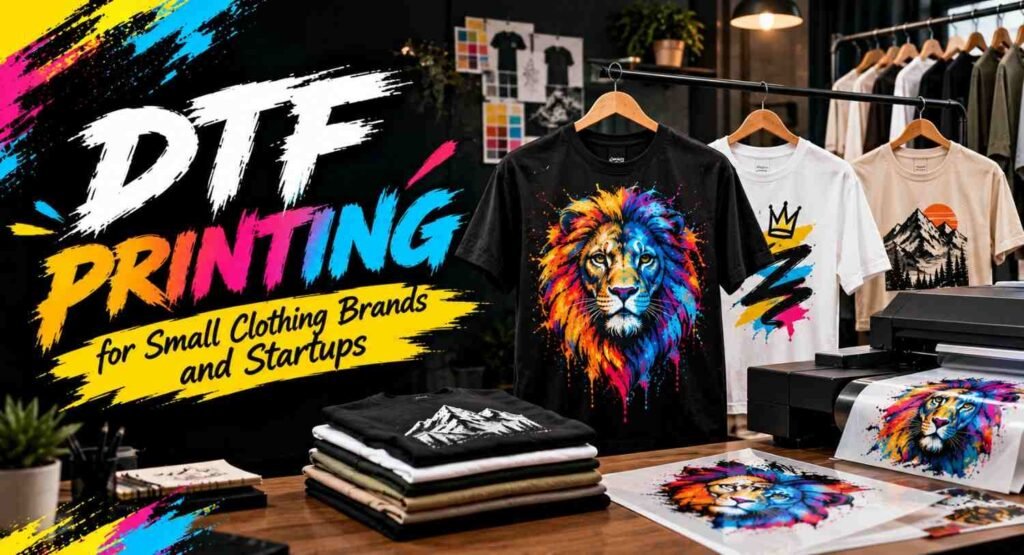
DTF Printing for Small Clothing Brands: A Practical Guide
Starting a small clothing brand often means balancing product quality, production costs, design flexibility and customer demand. For new businesses, ordering large quantities of printed garments can be risky, particularly when a design has not yet been tested with customers.
DTF printing offers a practical way for smaller clothing businesses to produce detailed garment designs without necessarily committing to large production runs. The process can work across a range of fabrics and is suitable for everything from branded clothing and limited collections to personalised products.
But is DTF printing the right choice for a small clothing brand? Understanding how the process works, what it can produce and what to consider before placing an order can help you make a more informed decision.
What Is DTF Printing and How Does It Work?
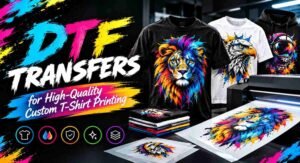
DTF stands for Direct to Film. Unlike direct-to-garment printing, the design is printed onto a special transfer film rather than directly onto the finished garment.
The basic process involves printing the artwork onto a coated film using specialised inks. A layer of adhesive powder is then applied to the printed design before it is cured. The prepared transfer is subsequently positioned on the garment and applied using a heat press.
This method allows designs to be prepared as transfers before they are applied to clothing. For small brands, that can provide useful flexibility when producing different designs, colours or garment types.
The process is generally suitable for detailed artwork, colourful graphics, logos, illustrations, text and photographic-style designs.
Why Is DTF Printing Useful for Small Clothing Brands?
Small clothing brands often need to test ideas before investing heavily in stock. A new brand may want to launch a limited collection, experiment with several designs or produce garments for a specific audience.
DTF printing can support this approach because transfers can be prepared for individual garment applications rather than requiring a traditional screen setup for every design.
Some of the potential advantages include:
- Design flexibility: Detailed and colourful artwork can be transferred onto garments.
- Suitable for different fabrics: DTF transfers can be used on many commonly printed textiles, subject to the transfer manufacturer’s specifications.
- Useful for smaller collections: Businesses can produce limited quantities while testing customer interest.
- Fast design changes: New artwork can be introduced without redesigning an entire production process.
- Personalisation: Names, numbers and individual graphics can be incorporated into suitable orders.
- Efficient sampling: Brands can create samples before committing to a larger collection.
For an emerging brand, this flexibility can make it easier to experiment with products while keeping production decisions closely connected to actual demand.
How Can Small Brands Use DTF Printing?
The versatility of DTF printing makes it suitable for several types of clothing products and business models.
Limited-Edition Clothing Collections
Small brands can create short-run collections around seasonal ideas, events, trends or specific campaigns. Instead of committing to a large quantity of one design, a business can test how customers respond to it.
This can be particularly useful for brands that regularly introduce new artwork.
Personalised Clothing
Personalised products can include names, numbers, initials, slogans or customer-specific artwork. This makes DTF transfers useful for businesses offering customised T-shirts, hoodies and other garments.
Brand Merchandise
Small businesses, creators and online communities can use printed garments as branded merchandise. Logos, slogans and visual branding can be applied to suitable garments without requiring a completely different printing method for every product.
Sample Products
Before launching a collection, a brand may want to inspect the actual garment and print together. Producing samples can help identify issues with sizing, positioning, artwork and colour choices before a larger order is made.
What Types of Designs Work Well with DTF?
DTF is particularly useful when a design contains multiple colours, fine details or complex artwork.
Common examples include:
- Detailed illustrations
- Colourful logos
- Small text and graphic elements
- Character artwork
- Photographic-style graphics
- Promotional designs
- Custom names and numbers
- Multi-colour brand artwork
However, artwork quality still matters. A high-quality transfer cannot completely compensate for a poor source file.
Small brands should prepare artwork at an appropriate resolution and check dimensions before production. Transparent backgrounds may also be important when creating designs intended to sit directly on different garment colours.
Can DTF Printing Help Reduce Risk for a New Clothing Brand?
It can help reduce certain production risks, but it does not eliminate them.
A new clothing brand may not know which designs will sell. Ordering large quantities before testing demand can leave the business with unwanted stock. Smaller production batches or sample runs can provide an opportunity to assess designs before expanding production.
However, the overall cost depends on factors such as garment prices, transfer costs, labour, shipping, packaging and order quantities.
The best approach is to calculate the complete cost per finished garment rather than looking only at the printing price.
A simple calculation can include:
Garment cost + transfer cost + application cost + packaging + delivery + other production expenses = approximate product cost
The selling price can then be planned around the actual cost structure and the brand’s commercial goals.
How Should Small Clothing Brands Choose DTF Artwork?
Artwork should be designed with the final garment in mind rather than created independently from the product.
Consider:
Garment Colour: A design may look different depending on whether it is placed on a white, black or coloured garment. Check the artwork against the intended garment colour before production.
Print Size: A graphic that looks good on a computer screen may be too large or too small when placed on a T-shirt. Consider the garment size, print position and intended visual effect.
Placement: Common placements include the centre chest, left chest, full front, back and sleeve. The correct position depends on the design and garment style.
Fine Details: Very small elements may become difficult to read or reproduce. Review detailed artwork at its intended print size before ordering.
When Should a Small Brand Choose DTF Printing?
DTF printing can be considered when a clothing business needs flexibility, detailed artwork or customised products.
It may be particularly relevant when:
- You are launching a new clothing collection.
- You want to test several designs.
- Your artwork contains multiple colours.
- You need personalised garments.
- You want branded merchandise.
- You are producing limited-edition products.
- You need samples before a larger production run.
- You want to print designs on different suitable garment materials.
It is still important to compare DTF with other decoration methods because the most suitable option depends on the garment, artwork, quantity, budget and desired finish.
How Much Does DTF Printing Cost for Small Clothing Brands?
There is no single price for DTF printing because the final cost varies between orders.
Important factors can include:
- Number of garments
- Transfer dimensions
- Artwork complexity
- Garment type and quality
- Number of print locations
- Personalisation requirements
- Transfer and application costs
- Delivery charges
- Supplier pricing
For example, a single customised garment will have a different cost structure from a larger batch using the same design.
Rather than comparing only the advertised transfer price, small brands should calculate the complete cost of producing each finished item. This makes it easier to set realistic retail prices and understand potential margins.
What Should Small Clothing Brands Check Before Ordering?
Choosing a printing supplier is an important part of maintaining consistent product quality.
Before placing an order, check:
- Artwork requirements – Confirm accepted file formats, resolution and sizing requirements.
- Garment compatibility – Make sure the chosen transfer is appropriate for the intended fabric.
- Application instructions – Check temperature, pressing time and other application requirements.
- Sample quality – Request or produce a sample where appropriate.
- Colour expectations – Understand how colours may appear on the selected garment.
- Order quantities – Check whether there are minimum or maximum quantities.
- Turnaround times – Confirm expected production and delivery times.
- Care instructions – Follow recommended washing and garment-care guidance to help maintain the print.
These checks can prevent avoidable problems and help a small brand create a more consistent customer experience.
How Can Small Brands Maintain DTF-Printed Garments?
Proper garment care can help maintain the appearance of printed clothing.
Customers should generally follow the specific care instructions supplied with their garments or transfers. Common recommendations for heat-applied prints may include washing garments according to the manufacturer’s instructions, avoiding unnecessarily high temperatures and taking care when ironing over printed areas.
Brands should also avoid promising a specific lifespan for a print unless that durability has been verified for the exact transfer, garment and application process being used.
Product-care information can be included with orders so customers know how to look after their clothing correctly.
Is DTF Printing Suitable for Growing Clothing Brands?
DTF can remain useful as a clothing business grows, but production requirements may change over time.
A small brand might initially prioritise flexibility and design testing. As order volumes increase, the business may begin comparing DTF with screen printing, embroidery or other decoration methods depending on the products and quantities involved.
The important point is that there is no single printing method that is ideal for every clothing brand. The right choice depends on the type of artwork, fabric, order volume, budget, product range and production goals.
For businesses looking for custom garment printing in London, T-Shirt Print London provides a relevant option to consider when planning printed clothing for a small brand.
What Are the Main Mistakes Small Clothing Brands Should Avoid?
A good printing method can still produce disappointing results if the production process is poorly planned.
Common mistakes include:
- Ordering a large quantity before checking a sample
- Using low-resolution artwork
- Ignoring the intended garment colour
- Choosing an unsuitable print size
- Failing to check fabric compatibility
- Calculating only the transfer cost instead of the complete product cost
- Not checking print placement carefully
- Giving customers unclear garment-care instructions
Testing the product before a wider launch is particularly useful for new brands. A sample allows the business to inspect the actual garment, artwork, placement and overall appearance before committing to a larger order.
Frequently Asked Questions
Is DTF printing good for starting a small clothing brand?
Yes, it can be suitable for small clothing brands that need design flexibility, detailed graphics, personalised products or smaller production runs. The suitability depends on the garment, artwork, quantity and overall production requirements.
Can DTF printing be used for custom clothing?
Yes. DTF transfers can be used for many customised clothing applications, including logos, names, numbers, illustrations and multi-colour graphics, provided the garment and transfer are compatible.
Is DTF suitable for limited-edition clothing?
DTF can be useful for limited-edition collections because it allows brands to produce specific designs without necessarily committing to very large quantities. Actual minimum order requirements depend on the supplier and production setup.
What garments can be used with DTF printing?
DTF transfers can be applied to many commonly used textile garments, including T-shirts, sweatshirts and hoodies. Compatibility should always be checked against the specific transfer, fabric and application instructions.
Should a new clothing brand order samples first?
Producing samples before a larger order can be a sensible step. It allows the brand to check artwork size, placement, colours, garment quality and the overall appearance of the finished product.
How long do DTF prints last?
Print durability depends on factors such as transfer quality, garment fabric, application conditions, washing practices and general wear. Following the supplier’s application and care instructions is important for maintaining the print.
Is DTF better than screen printing for a small clothing brand?
Neither method is universally better. DTF can be useful for detailed, colourful and customised designs, while screen printing may be suitable for other artwork and production requirements. The appropriate choice depends on quantity, design, fabric, budget and desired result.
Can DTF printing be used for branded merchandise?
Yes. Small brands, creators, organisations and businesses can use DTF transfers for suitable branded merchandise, including garments featuring logos, graphics, slogans or other brand elements.